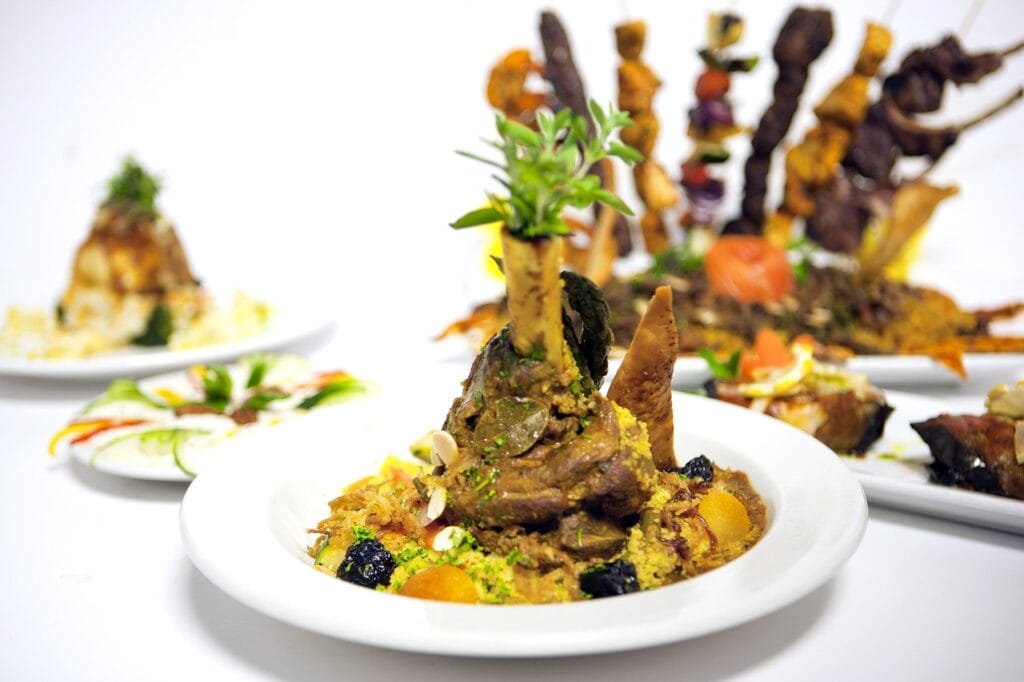
Moroccan cooking tastes the way it does because the country sits at a crossroads. Berber (Amazigh) foodways form the base, Arab traders brought spices and cooking techniques, Andalusian refugees carried Mediterranean and Persian-influenced dishes across the Strait of Gibraltar, and trans-Saharan caravans moved spices, dried fruit, and preserved goods up from West Africa. No single culture explains a Moroccan table. All of them do, layered over centuries to build the authentic Moroccan recipes.
This guide is not a “30 best recipes” roundup. It walks through ten dishes that define Moroccan home cooking, with the historical and cultural context that explains why each one looks and tastes the way it does. Where a popular claim about a dish’s age or origin cannot be verified against a credible source, this guide says so plainly rather than repeating it as fact.
Use it to understand what you are cooking, not just how to cook it. Each section includes practical notes on ingredients and technique, and a later section covers substitutions for cooks who cannot find preserved lemon, warka pastry, or a full ras el hanout blend locally.
Key Takeaways
- Moroccan cuisine blends Berber, Arab, Andalusian, and trans-Saharan influences rather than descending from one tradition.
- A traditional meal follows a sequence: salads first, then soup, then the tagine or couscous centerpiece, then mint tea and pastries.
- UNESCO inscribed the knowledge and practices around couscous production as intangible cultural heritage in 2020 (UNESCO).
- Harissa, the chili paste common on Moroccan tables, is Tunisian in origin; UNESCO recognized it as Tunisian heritage in 2022 (France 24).
- Several widely repeated claims about specific dish origins, harira’s exact age and preserved lemon’s precise invention date among them, do not trace back to a verifiable source, so this guide omits the specific numbers.
- Home cooks without access to Moroccan grocers can substitute a DIY spice blend, a quick lemon-brine hack, and phyllo dough for warka pastry without losing the dish’s character.
How a Traditional Moroccan Meal Is Structured
A Moroccan meal builds in stages rather than arriving all at once. Cold and cooked salads come first, small plates meant to be shared and eaten with bread. A soup, often harira, follows, especially during Ramadan or in cooler months. The main course centers on a tagine or a couscous dish, usually the largest and most anticipated part of the meal. Mint tea and pastries close things out, and the tea itself is treated as a ritual rather than an afterthought.
This sequence reflects hospitality customs as much as nutrition. Guests are served the lightest food first and the richest, most labor-intensive dish, the tagine or couscous, as the centerpiece everyone gathers around. Tea signals that the meal is winding down but the conversation is not.
The three points below mark documented, sourced milestones in how these dishes reached their current form and recognition. The chart does not attempt to quantify anything that lacks a real number behind it.
Andalusian refugees
shape Fez cuisine,
including pastilla
2020
UNESCO inscribes
couscous knowledge
and practices
2022
UNESCO recognizes
harissa as Tunisian
cultural heritage
Sources: National Geographic; UNESCO Intangible Cultural Heritage Lists; France 24
Harira
Harira is the soup most Moroccans associate with breaking the fast during Ramadan, though families make it year-round, especially in colder months. The base is tomato, lentils, and chickpeas, thickened with a flour-and-water slurry called tedouira and finished with fresh herbs, lemon, and sometimes small pieces of lamb or chicken. Dates and honeyed pastries typically sit next to the bowl at iftar, balancing the soup’s acidity with sweetness.
You will find claims online about harira’s exact age, sometimes citing a figure in the thousands of years. That specific number does not trace back to a verifiable historical source, so this guide leaves it out. What is well documented is the soup’s central, current role in Ramadan meals across Morocco.
How Harira Is Made
Onion, celery, and tomato form the aromatic base, simmered with lentils and chickpeas until soft. The flour slurry is whisked in gradually near the end to avoid clumping, giving the soup its characteristic body. Cilantro, parsley, and a squeeze of lemon go in just before serving.
Serving Harira
Serve harira with dates, hard-boiled eggs, and chebakia (a sesame-honey pastry) on the side, following the traditional Ramadan iftar spread.
Chicken Tagine with Preserved Lemon and Olives
The tagine takes its name from the conical clay vessel it cooks in, not just the finished dish. The shape traps steam and circulates it back down onto the food, which is how the meat stays tender over a long, slow cook with relatively little added liquid.
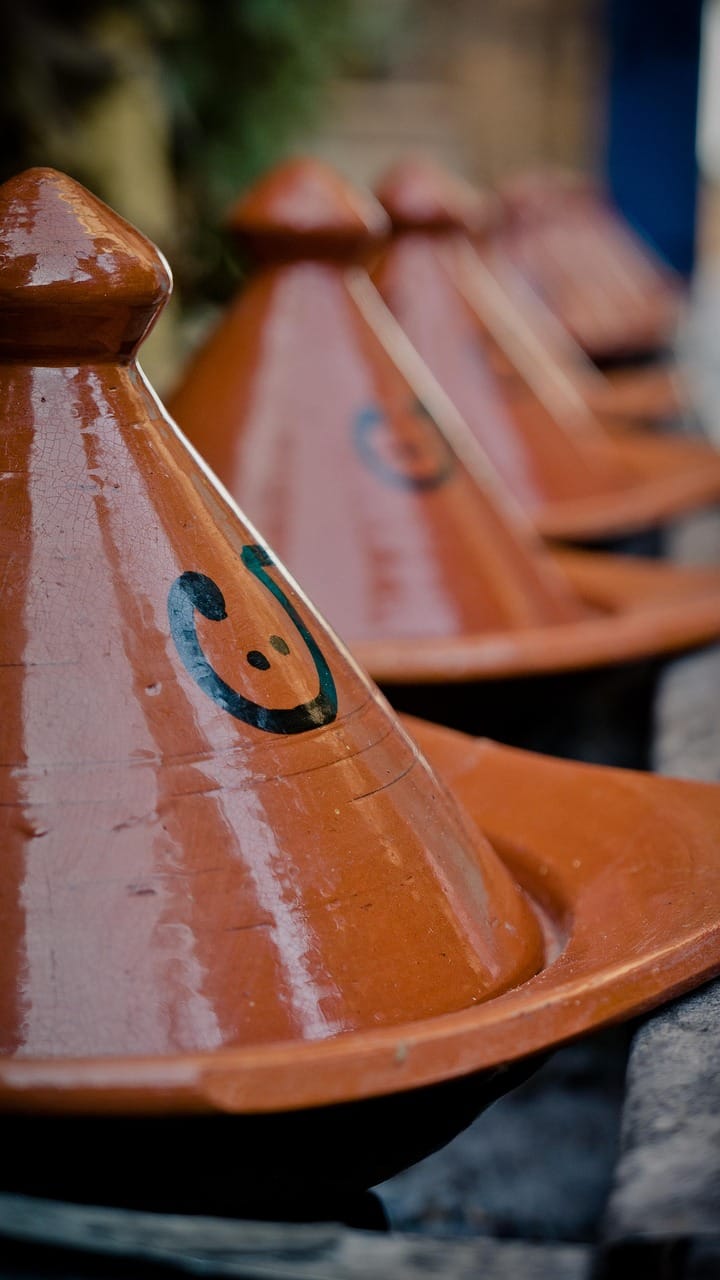
The cookware’s origins are widely traced to North Africa’s Berber culinary tradition, according to Encyclopaedia Britannica’s overview of the dish and its vessel (Britannica), though the exact century of its invention is harder to pin down with precision. What is clear is that the pot shape and the low, slow cooking method it enables became a defining feature of Moroccan home cooking long before it became an export item to Western kitchens.
Chicken with preserved lemon and green olives is one of the most recognized versions of the dish. The lemon’s salt-cured rind delivers a concentrated, slightly bitter brightness that fresh lemon cannot replicate, and it balances the richness of the olive oil and the chicken fat rendered during the slow cook.
Ingredients
- Bone-in chicken pieces
- Onion, garlic, fresh ginger
- Turmeric, and a pinch of saffron threads if available
- Preserved lemon
- Green olives
- Olive oil
- Fresh cilantro and parsley
How the Tagine Is Made
The chicken browns lightly, then simmers with the onion and spices under a covered tagine (or a heavy lidded pot as a substitute) until it falls easily from the bone. Preserved lemon and olives go in during the last stretch of cooking so they season the dish without turning mushy.
Couscous
Couscous is steamed semolina, traditionally hand-rolled and cooked in stages over a pot of simmering broth and vegetables using a two-part steamer called a couscoussier. Friday, the day of communal prayer, is the customary day for a family couscous meal in much of Morocco, typically built around seven vegetables, lamb or chicken, and a rich broth ladled over the grain at the table.
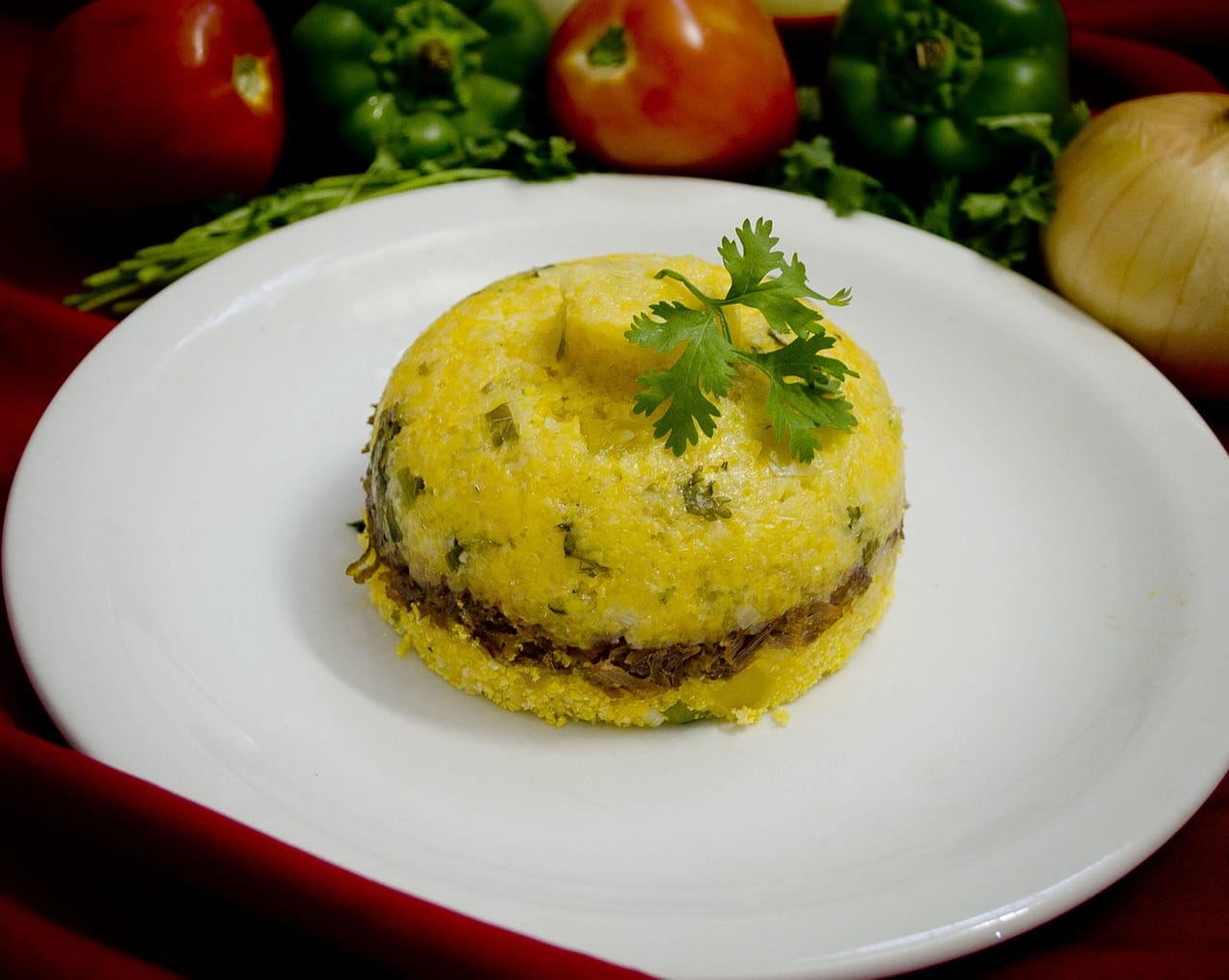
In 2020, UNESCO added “the knowledge, know-how and practices pertaining to the production and consumption of couscous” to its Representative List of the Intangible Cultural Heritage of Humanity. The inscription was a joint submission from Algeria, Mauritania, Morocco, and Tunisia, recognizing couscous as a shared regional tradition rather than any single country’s invention (UNESCO).
How Couscous Is Made
Dried semolina is steamed, fluffed by hand with a little water and oil, and steamed again, repeated two or three times to achieve the light, separate grains that distinguish good couscous from a gluey, undercooked batch. Vegetables and meat cook separately in the broth below and are ladled over the finished grain.
Serving Couscous
Pile the couscous on a large communal platter, arrange the vegetables and meat on top, and pour extra broth over the grain just before serving so it stays moist.
Pastilla (Bastilla)
Pastilla is a savory-sweet pie built from paper-thin warka pastry, traditionally filled with pigeon (squab) or, more commonly today, chicken, spiced with cinnamon, ginger, and saffron, layered with toasted almonds, and dusted with powdered sugar and cinnamon on top. The contrast, savory meat filling under a sweet, crisp top, is the dish’s signature.
The dish is closely associated with Fez, and its layered pastry technique is widely linked to the influence of Andalusian refugees who settled in Morocco’s imperial cities after being expelled from Spain, bringing Mediterranean and Moorish cooking techniques with them. National Geographic’s reporting on the dish traces this Andalusian connection and Fez’s role as the pie’s culinary home (National Geographic).
How Pastilla Is Made
The filling, usually pigeon or chicken simmered with onions, eggs, and spices, gets wrapped in layers of buttered warka sheets along with a ground almond-and-sugar mixture, then baked until the pastry turns golden and shatteringly crisp.
Serving Pastilla
Slice it like a cake and serve warm. The sugar-and-cinnamon dusting on top is traditional, not optional garnish.
Zaalouk
Zaalouk is a cooked salad, closer to a chunky dip, made from eggplant and tomato simmered down with garlic, cumin, paprika, and olive oil until soft and spreadable. It sits alongside other salads at the start of a Moroccan meal, scooped up with pieces of khobz (round Moroccan bread) rather than eaten with a fork.
The dish reflects the Berber culinary tradition’s emphasis on vegetables cooked slowly with a short list of spices rather than elaborate technique. Regional versions vary in how finely the vegetables are mashed and how much garlic and cumin they carry, but the eggplant-and-tomato combination stays constant.
How Zaalouk Is Made
Eggplant is roasted or boiled until very soft, then chopped or mashed and cooked down with tomato, garlic, and spices until the mixture thickens into a coarse paste. A finishing drizzle of olive oil and a squeeze of lemon brighten the dish just before serving.
Msemen
Msemen is a square, laminated flatbread, folded in layers with oil or butter between them before being cooked on a flat griddle. The lamination gives it a flaky, slightly chewy texture that sets it apart from a simple flatbread like khobz. It shows up most often at breakfast or alongside afternoon mint tea, split open and spread with honey, amlou, or soft cheese.
Accounts of the bread’s exact regional origin and etymology vary, and the sourcing behind specific claims about its history is thin, so this guide treats those details generally rather than repeating a single unverified account as settled fact. What is consistent across sources is its role as an everyday tea-time and breakfast staple across Morocco.
How Msemen Is Made
A soft, oiled dough is stretched thin, folded into a square packet, and cooked on a hot griddle until golden and layered, brushed with more oil or butter as it cooks to keep the layers distinct.
Moroccan Mint Tea (Atay)
Mint tea in Morocco is less a beverage than a hospitality ritual. Green tea (usually gunpowder tea) is brewed strong, sweetened generously with sugar, and packed with fresh spearmint, then poured from a height into small glasses to build a light foam on top. Refusing a glass of tea when offered is generally considered impolite, and the tea is often poured, tasted, and adjusted, then poured again, a process sometimes described as the “three pours” before a host considers it ready to serve.

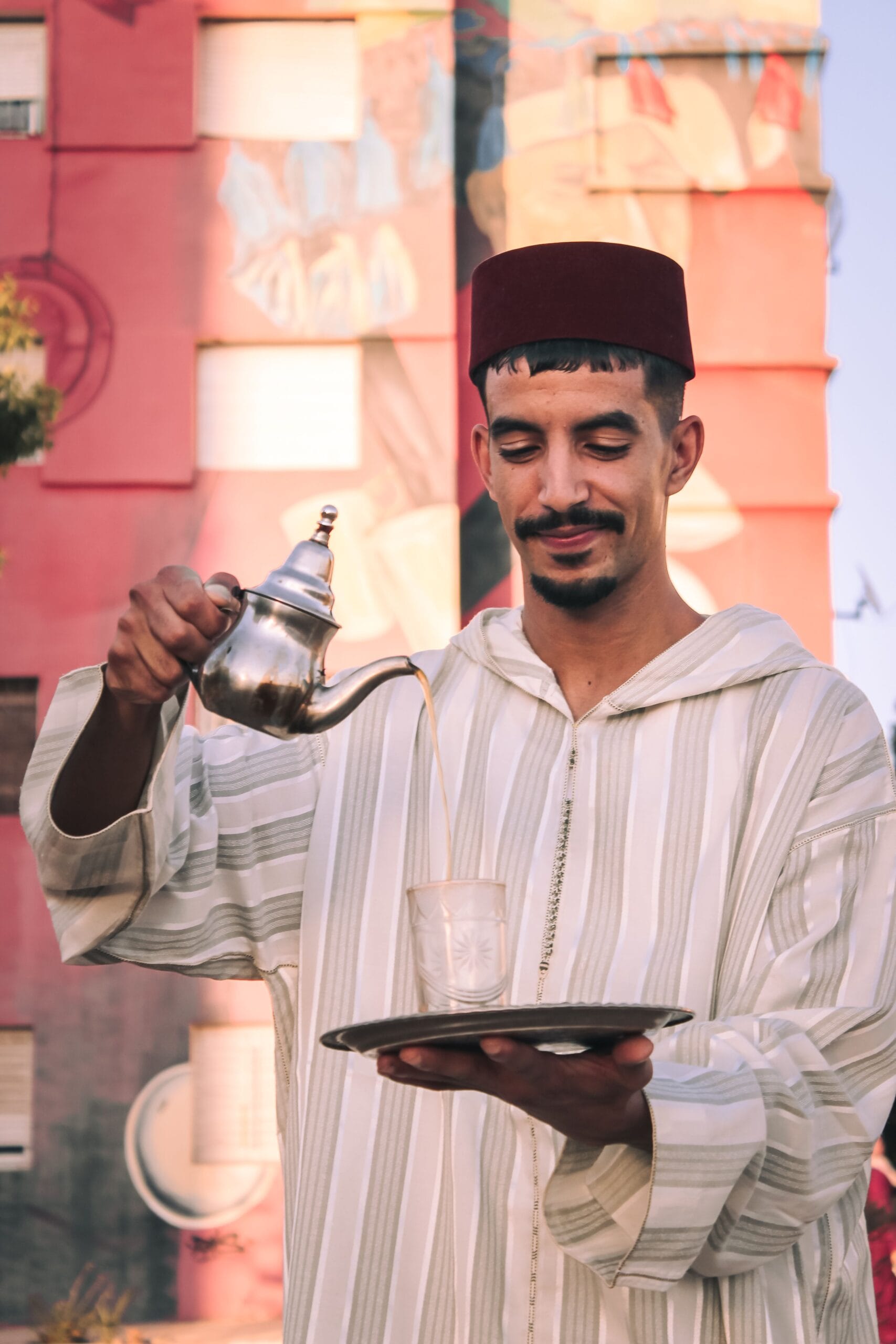
The pouring height is not just theater. It aerates the tea, cools it slightly for drinking, and produces the foam layer that experienced tea-makers treat as a sign the tea was made correctly.
Serving Mint Tea
Pour a first glass, taste it, and adjust the sugar or mint before pouring for guests. Serve in small, footed glasses rather than mugs.
Kefta
Kefta is ground beef or lamb mixed with onion, garlic, parsley, cilantro, cumin, and paprika, then shaped into small meatballs or long kebabs and grilled or simmered in a tomato-based tagine sauce, sometimes finished with a cracked egg on top just before serving. It is one of the most common street-food and home-cooking preparations in Morocco, versatile enough to appear as a sandwich filling, a skewer, or a simmered tagine.
The spice mix stays fairly consistent across regions: cumin and paprika dominate, with fresh herbs added generously rather than as a garnish. The dish’s simplicity, ground meat, a handful of pantry spices, and fresh herbs, makes it one of the more approachable entry points into Moroccan cooking for home cooks unfamiliar with the cuisine.
How Kefta Is Made
The meat is mixed with grated onion, minced garlic, chopped herbs, and spices, then rested briefly so the flavors distribute before shaping and cooking. Kefta tagine simmers the shaped meatballs directly in a spiced tomato sauce; grilled kefta skewers cook quickly over direct heat instead.
Amlou
Amlou is a thick, nutty spread made from roasted almonds, argan oil, and honey, blended until smooth and often described as a Moroccan alternative to peanut butter, though the flavor is nuttier and more toasted, with the argan oil’s distinct, slightly smoky character coming through.
Argan oil production is centered in the Souss-Massa region of southwestern Morocco, where argan trees grow natively and largely nowhere else in commercial quantities. Women’s cooperatives play a significant role in argan oil production in the region, providing income and formal employment structures for rural women; the specific decade or year individual cooperatives were founded varies by organization and is not something this guide states as a single verified figure.
How Amlou Is Made
Roasted almonds are ground, sometimes with a mortar and pestle in traditional preparation, then mixed with argan oil and honey until the mixture reaches a thick, spreadable consistency.
Serving Amlou
Spread it on warm msemen or khobz, the same way you might serve peanut butter on toast.
Moroccan Salad Course
Moroccan meals typically open with a spread of small salads rather than one large dish, split between cooked (zaalouk among them) and raw preparations. A raw tomato-and-cucumber salad with olive oil and lemon, a carrot salad with cumin and orange blossom water, and marinated olives are common alongside cooked options.
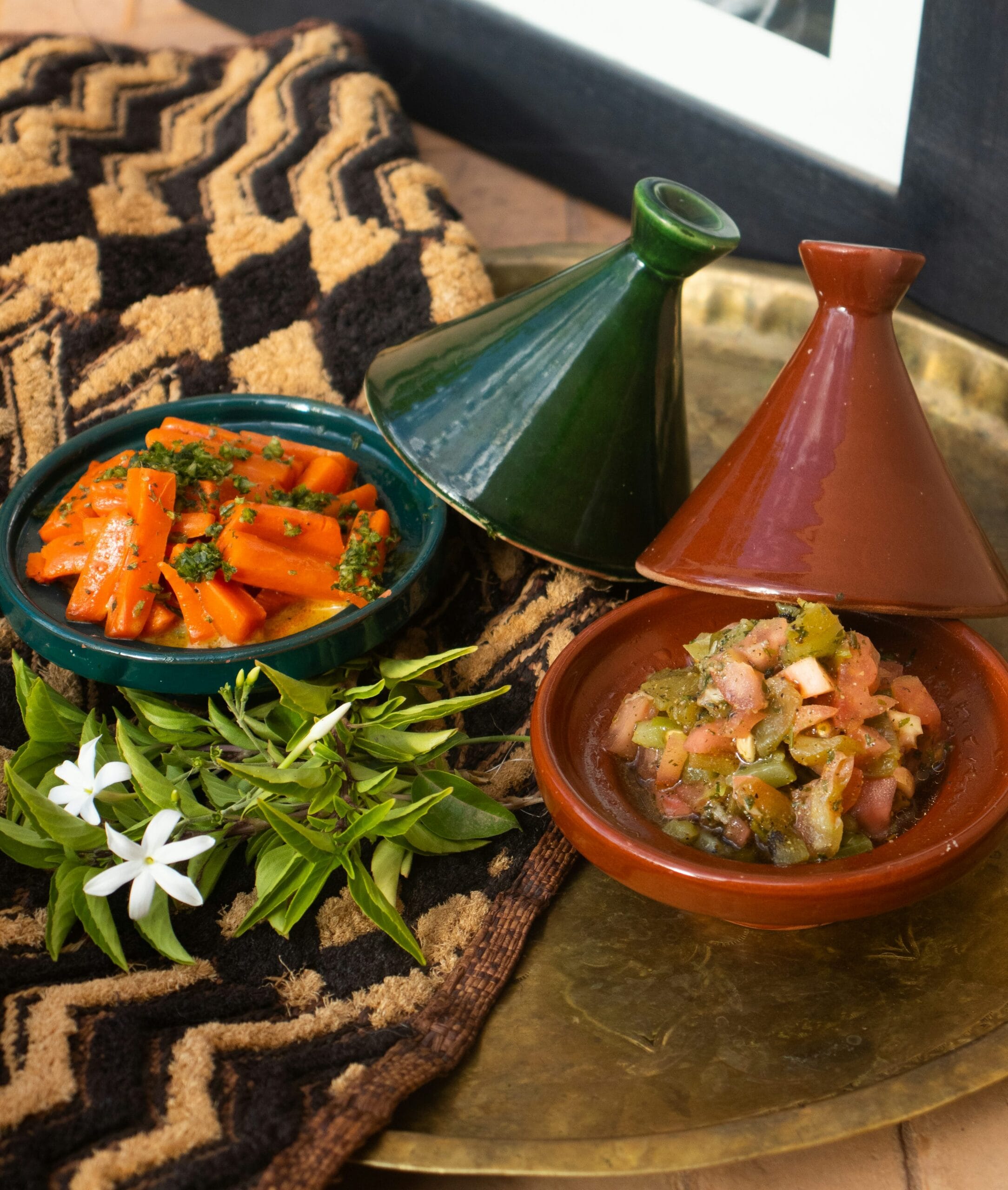
The variety matters more than any single recipe. A proper spread mixes textures, cooked and raw, spiced and plain, so the table offers contrast before the richer tagine or couscous course arrives. Bread, rather than utensils, is the primary tool for eating most of these salads.
Serving the Salad Course
Offer at least three or four different salads in small bowls, arranged around the table so guests can sample several rather than fill a plate with just one.
A Word on Harissa
Harissa, the red chili paste sold in nearly every Moroccan market and used as a condiment alongside tagines and sandwiches, is not originally a Moroccan dish. It is Tunisian in origin. In December 2022, UNESCO’s Intergovernmental Committee, meeting in Rabat, inscribed harissa on the Representative List of the Intangible Cultural Heritage of Humanity specifically as Tunisian heritage, recognizing the knowledge, skills, and practices associated with the paste’s production in Tunisia (France 24).
Morocco’s widespread adoption of harissa reflects the same regional trade and cultural exchange that shaped so much of its cuisine. Its presence on Moroccan tables does not make it Moroccan any more than Moroccan couscous makes couscous exclusively Moroccan (it is a shared regional tradition across several North African countries, as the earlier UNESCO inscription recognizes). Getting the distinction right matters for anyone trying to understand which dishes are genuinely rooted in Moroccan tradition versus adopted from neighboring cuisines.
Ingredient Substitutions
Cooking Moroccan food outside Morocco often means adapting to what your local grocery stock actually carries. These substitutions keep the character of the dish intact without requiring a special trip to a North African market.
Ras el Hanout, Building Your Own Blend
Ras el hanout, whose name translates roughly to “head of the shop,” referring to a spice seller’s best blend, typically combines a long list of warm spices: cumin, coriander, cinnamon, ginger, turmeric, cardamom, and often a dozen more depending on the seller. Exactly which spices go in, and in what proportion, varies by seller and region, so no two blends taste quite the same.
If you cannot find a pre-mixed blend, combine roughly equal parts cumin, coriander, ginger, and cinnamon, then add smaller amounts of turmeric, black pepper, and a pinch of cardamom or nutmeg. It will not match a spice seller’s proprietary twenty-ingredient version, but it covers the flavor profile most home recipes need.
Preserved Lemon, Quick Substitute
True preserved lemon needs weeks of curing in salt and its own juice. For a same-day substitute, combine lemon zest, a squeeze of lemon juice, and a pinch of salt, and let it sit for 15 to 20 minutes before adding it to the dish. The flavor is brighter and less funky than the real thing, but it fills the gap in a pinch.
Warka Pastry, Phyllo Swap
Warka is thinner and more elastic than phyllo dough, but phyllo works as a reasonable substitute for pastilla. Layer at least two sheets of phyllo together per layer you would use warka for, brushing butter or oil between each sheet, since phyllo tears more easily and needs the extra layer for structural support.
| If you don’t have | Use instead | Ratio / notes |
|---|---|---|
| Ras el hanout | Cumin, coriander, ginger, cinnamon (equal parts) + a little turmeric, black pepper, cardamom or nutmeg | Covers the core flavor profile; won’t match a 20-spice proprietary blend |
| Preserved lemon | Lemon zest + a squeeze of juice + a pinch of salt, rested 15-20 min | Brighter, less funky than true preserved lemon, but works in a pinch |
| Warka pastry | Phyllo dough | Use 2 sheets of phyllo per 1 sheet of warka; brush oil or butter between every layer |
FAQ
Is Moroccan food spicy?
Not typically in the chili-heat sense. Moroccan cooking leans on warm spices, cumin, cinnamon, ginger, turmeric, rather than heat. Harissa, which does bring heat, is a condiment added at the table rather than cooked into most dishes, and as noted above, it is Tunisian rather than native Moroccan.
What’s the difference between the tagine dish and the tagine pot?
“Tagine” refers to both the conical clay cooking vessel and the slow-cooked stew made in it. Context usually makes clear which one is meant: a shop selling “tagines” is selling the pots, while a menu listing “chicken tagine” is describing the dish.
What do you serve first at a Moroccan meal?
Salads come first, a mix of cooked dishes like zaalouk and raw preparations like a cumin-spiced carrot salad, followed by a soup such as harira, then the tagine or couscous main course, and finally mint tea and pastries.
Closing Thoughts
Moroccan cuisine rewards attention to where its dishes actually came from. Couscous belongs to a shared regional tradition across North Africa, harissa is Tunisian even though it sits on every Moroccan table, and pastilla carries the fingerprints of Andalusian refugees who settled in Fez centuries ago. None of that history is required to enjoy the food, but it explains why a Moroccan meal unfolds the way it does: salads first, then soup, then the tagine or couscous everyone gathers around, then tea poured with enough ceremony to make clear the meal is not quite over yet.
Start with one dish, a chicken tagine or a pot of harira, and build from there. The spices and techniques repeat across the cuisine, so each dish you learn makes the next one easier.